Why Joining a UK Running Club Will Make You Faster, Fitter, and Slightly Less Sane
It’s 6:47am. It’s raining. Not dramatically raining. Just that thin, grey, relentless British drizzle that gets into your soul faster than it gets into your waterproof. Your alarm went off at 5:45am and you reset it four times before guilt dragged you vertical. You’ve got a gel in your pocket, one AirPod that’s already at 12% battery, and a towpath ahead of you that’s entirely alone.
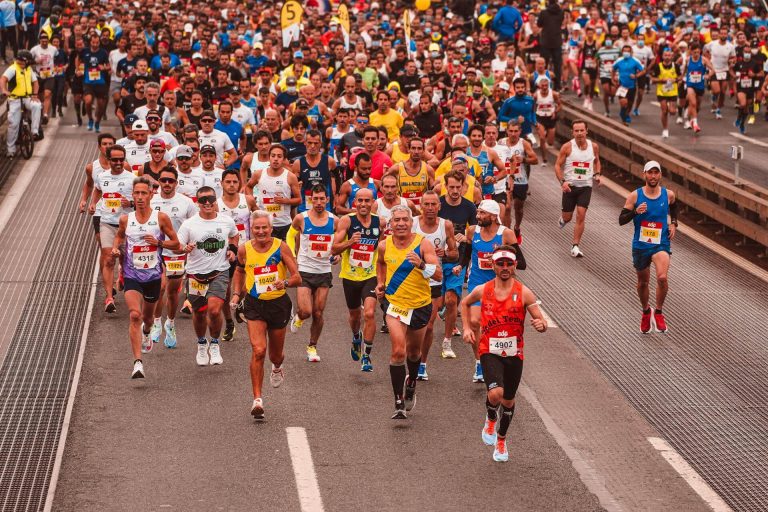
Now imagine that exact scenario, but there are nine other people there with you. Some of them are annoyingly cheerful. One of them has already done five miles “as a warm-up.” And one – there’s always one – has not stopped talking since the car park. That, in a nutshell, is the UK running club experience. And somehow, inexplicably, it is better.
Whether you’re a Parkrun regular eyeing up a sub-25, or a marathon hopeful who keeps abandoning the Sunday long run after 8 miles because nobody is watching, a UK running club might be the single biggest upgrade you can make to your training. Let’s get into it.
The Honest Pros and Cons of Running With a Group
Let’s not pretend it’s all PBs and post-run cake (though there is post-run cake). Group running is brilliant, maddening, motivating, and occasionally insufferable in equal measure.
The Person Who Will Not Stop Talking
Every club has one. They’ve been running for 23 years. They have opinions about foam rolling, periodisation, and exactly why your trainers are wrong for your gait. They will tell you all of this. During intervals at the track. While you are trying to not actually die.
The upside? They’re also the person who texts you when you haven’t shown up for two weeks. They remember your PB. They ask about your dodgy knee. The chatter is annoying for approximately the first mile and then, honestly, you stop noticing. And on a 15-mile Sunday long run, having something to listen to other than the wind and your own increasingly dark thoughts? Priceless.
The downside of running with others is real though:
- Your pace becomes someone else’s pace. Sometimes that’s great. Sometimes you end up racing a 55-year-old ex-triathlete who has nothing to prove and also, somehow, legs made of carbon fibre.
- Group runs do not care about your stomach. That second coffee was a mistake. The towpath is long. There are no bushes.
- You will feel obligated to show up when you’d rather not. (This is also secretly a pro.)
- The post-run debrief at the pub adds at least 40 minutes to your Tuesday evening every single week.
The Silence of the Solo Long Run (And Why It Has Limits)
There is genuine magic in a 15-mile solo effort. Just you, your playlist, and the slow accumulation of miles. No one to judge your pace. No one to witness you eat a gel off your own forearm because your hands are too cold to open the packet properly. Just quiet suffering, which is its own kind of meditation.
But here’s the thing about the solo long run: it has an exit. And that exit appears somewhere around mile 10, when your legs start a committee meeting about whether this was a good idea. In a group, there is no exit. You are three miles from the cars. You are committed. You finish.
Marathon training especially benefits from this social accountability. The data backs it up too – according to Runner’s World, runners who train with others are significantly more likely to complete long runs at target pace than those who train alone. The group carries you when your brain wants to bail.
That said, not every run should be social. Your easy runs – your actual easy runs, not the ones you claim are easy while quietly redlining – are often better done alone. No pressure. No ego. Just miles in the bank. The Norwegian Singles Method is built on exactly this principle: quality and quantity, done right, without the chaos of trying to match someone else’s effort.
How a UK Running Club Helps You Suffer More Effectively
This is the bit nobody puts on the club poster but everyone who’s been in a club for more than six months knows: the real value of a running club is structured, witnessed suffering.
Solo intervals are negotiable. “I’ll do five instead of eight, it’s fine, I’m tired.” Club track night intervals are not negotiable. There are people watching. There is a coach with a clipboard. You will run all eight. You will hate every one of them. You will also, three weeks later, notice your 5K time has dropped by 45 seconds and you’ll feel quietly smug about it.
UK running clubs typically offer:
- Coached track sessions (intervals, tempo efforts, drills you’ll feel daft doing alone but brilliant doing in a group)
- Regular group long runs with defined pacing groups so you’re not being dragged or left behind
- Race support and coordination – clubs often organise race entries, car shares, and the kind of pre-race faff that makes the whole thing feel like an event
- Actual feedback on your form, not just an algorithm telling you your cadence is low
- The accountability of people noticing when you disappear for three weeks
According to England Athletics, there are over 1,700 affiliated running clubs in England alone. There is a club near you. It probably meets on a Tuesday evening in a leisure centre car park and has a name that involves either the local river, a hill, or the word “Harriers.” And it will make you a better runner.
Finding the Right UK Running Club for You
Not all clubs are the same. This is important. Turning up to the wrong club as a 32-minute Parkrunner can be genuinely demoralising if everyone else is discussing their sub-3-hour marathon splits. Equally, if you’re chasing a club championship and everyone else is there for a social jog and a pint, you’ll go quietly mad.
Here’s how to find your people:
- Use the England Athletics club finder at englandathletics.org to search by postcode. Simple, comprehensive, free.
- Go as a guest first. Most clubs offer trial runs. Don’t commit based on a website photo and a Facebook group that hasn’t been updated since 2021.
- Ask about pace groups. Any club worth joining has multiple pace groups and won’t make you feel bad for being in the slower one. The slower ones are often more fun, for what it’s worth.
- Check the vibe. Is there banter at the end? Do people stick around? Is there a WhatsApp group that moves faster than the group run itself? Good signs, all of them.
- Look at the race results. Not to benchmark yourself against – just to see if the club is active and competitive at a level that matches your ambitions. Athletics Weekly and the Power of 10 database are great for this.
If you’re just starting out, by the way – genuinely new to running beyond the school gates – then the right first step might actually be completing a Couch to 5K before diving into a club environment. Our honest week-by-week guide to Couch to 5K has you covered before you even lace up with strangers.
Real Talk
Here’s the bottom line. A UK running club will not automatically make you faster. It won’t fix your black toenails, prevent the 5am rain alarm, or stop you from taking a wrong turn on a dark November cross-country and ending up in a field. What it will do is make all of that significantly more bearable, and occasionally hilarious.
Running alone has its place. The meditative solo long run, the quiet early miles before the world wakes up – that stuff is genuinely precious. But running with a club gives you something you can’t manufacture on your own: the slightly insane collective commitment to put yourself through interval sessions on a cold Tuesday evening, together, for reasons that only make sense if you’re a runner.
The chatterbox? You’ll love them eventually. The pace groups? They’ll push you more than you push yourself. The post-run debrief in the car park that somehow becomes a 40-minute conversation about race nutrition? Honestly, some of the best conversations you’ll have this year.
Find your club. Show up twice before you decide if it’s for you. And if you want to read more about training smarter before you get there, have a look at how the Norwegian Singles Method can reshape your whole approach to building mileage. Your future Tuesday-evening self will thank you.