Running in a Heatwave UK: A Realistic Survival Guide
Table of Contents
Right, let’s address the elephant in the room: running in a heatwave UK style is a genuinely strange sport. One week you’re battling sideways sleet in a bin bag with sleeves, the next you’re melting into the pavement on the club run because the Met Office has decided 28°C counts as “tropical.” It doesn’t feel fair. It isn’t fair. But the sun is out, your training plan says 8 miles easy, and your club WhatsApp is already full of people threatening to just “do it early.” So here’s the actual, unglamorous truth about how to keep running when the UK forgets its own climate for a fortnight.
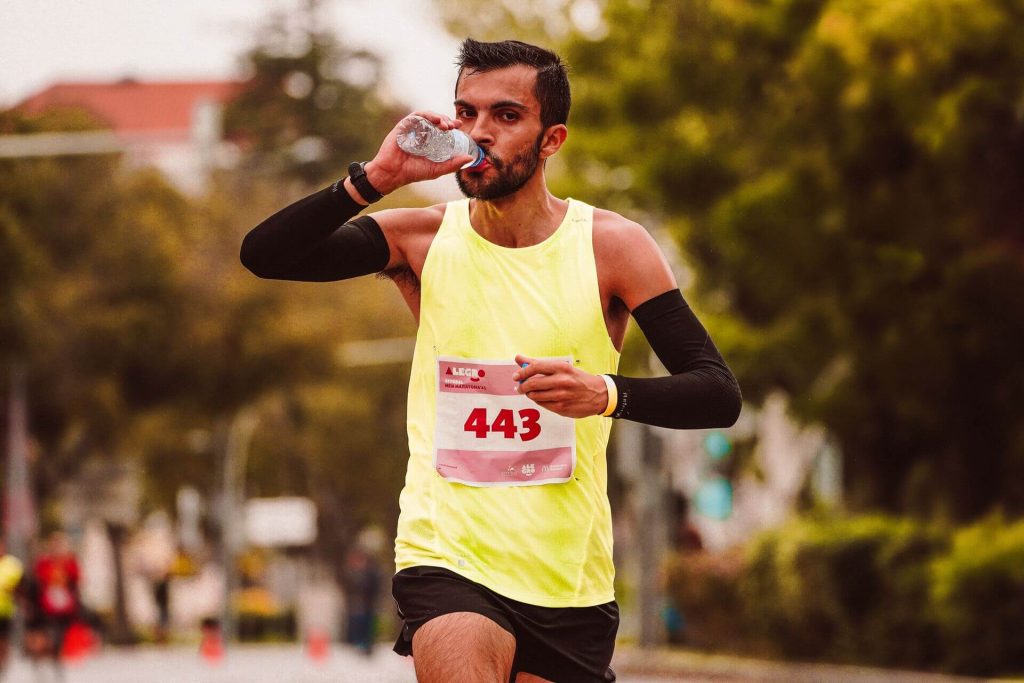
Little and often beats one heroic gulp at the water fountain.
Why Running in a Heatwave UK Feels So Much Harder (And Why That’s Normal)
Here’s the bit nobody tells you at parkrun: it’s not you. British bodies and British roads simply aren’t built for this. We don’t have the tarmac shimmer, the siesta culture, or the decades of acclimatisation that runners in, say, Seville have. Our roads retain heat like a stroppy toddler holds a grudge, our houses don’t have air con, and most of us have precisely one summer vest that still fits. When the temperature spikes, your heart has to do two jobs at once: pump blood to your legs and pump blood to your skin to cool you down. That’s why a pace that feels like your normal easy jog on a mild day suddenly has you wheezing like you’ve just sprinted for a bus. Your PB is not disappearing. Your fitness has not evaporated overnight. Your body is just busy being a radiator.
What Heat Actually Does to Your Pace
Expect anywhere from 20 to 45 seconds per mile slower once the mercury climbs past the low 20s, more if it’s humid too (and Britain does love a good muggy day, the kind where the air feels like a wet flannel). This isn’t a fitness problem, it’s physics. According to England Athletics’ guidance for clubs training in hot weather, athletes should expect reduced performance and increased sun protection needs whenever conditions heat up, which is a fairly polite way of saying: don’t be a hero.
Best Time to Run in Summer Heat (Spoiler: It’s Not Lunchtime)
If you’re wondering about the best time to run in summer heat, the honest answer is annoyingly simple: whenever the sun isn’t directly overhead grilling you like a Sunday roast. That usually means before 8am or after 7pm. Yes, this might mean setting an alarm that starts with a 4 or a 5. Yes, your non-running housemates will think you’ve lost the plot. They’re not wrong, but you’ll have the trails to yourself and a smug sense of superiority by breakfast.
Early Morning vs Evening: The Trade-offs
- Early morning: coolest air, softest light, but you’re running on yesterday’s dinner and possibly no coffee, which some club runners consider a war crime
- Evening: more daylight to plan around, but the tarmac has been baking all day and is still radiating heat like a low-grade oven
- Midday: technically an option if your GP practice is nearby and you enjoy paperwork
- Dusk (after 9pm in high summer): underrated, cooler, but bring a head torch if you’re anywhere near trail routes or unlit towpaths
Here’s a quick comparison to save you squinting at a weather app mid-decision:
| Time Slot | Typical UK Heatwave Temp | Sun/UV Exposure | Suggested Pace Adjustment | Best For |
|---|---|---|---|---|
| Before 6am | 14-18°C | Low, sun barely up | Minimal, close to normal effort | Speed sessions, long runs |
| 6-8am | 17-21°C | Rising but manageable | Slow by 5-10% | Easy runs, club sessions |
| 12-3pm | 26-32°C+ | Peak UV, avoid if possible | Not recommended outdoors | Treadmill, rest day, admin |
| 6-8pm | 22-26°C | Moderate, low sun angle | Slow by 5-10% | Recovery jogs, social runs |
| After 9pm | Cooling, sometimes humid | Minimal | Slight adjustment only | Long runs, chatty club miles |
Hydration Tips for Running in the Heat (Without Turning Into a Human Water Balloon)
Every summer, without fail, someone on the club run tries to solve dehydration by drinking two litres in one go before setting off, then spends the session sloshing like a washing machine on spin. That’s not the answer. Good hydration tips for running in the heat are about steady, boring consistency, not last-minute panic drinking.
- Start hydrating the day before, not ten minutes before you lace up
- Sip little and often during the run rather than gulping at every water stop
- Weigh yourself before and after a long run once, just to get a rough idea of how much you actually sweat (it’s more than you think, and slightly less dignified to discuss than pace)
- Add electrolytes on anything over 60-90 minutes, especially if you’re one of those unfortunate souls who finishes every run looking like they’ve been salt-glazed
Electrolytes, Salt Tabs, and Other Things Your Club Mates Won’t Shut Up About
Somewhere in every running club there’s a person who will not stop talking about their electrolyte tablets. Annoyingly, they usually have a point. Heavy sweating in the heat strips out sodium as well as water, and replacing only water can leave you feeling worse, not better. The NHS’s guidance on coping in hot weather is a sensible, non-branded place to start if you want the basics without a marketing pitch attached.
Pacing in Hot Weather Running: Bin the Watch Goals
This is the hardest lesson of all, harder than any hill session: your usual pace is not available to you today. Pacing in hot weather running means running by effort and heart rate, not by the number glowing at you from your wrist. If you’re training for a summer race, whether that’s a low-key 10K or 26.2 miles of proper suffering in the autumn, the smart move is to protect the training block, not the Strava segment. Some runners actually use heat sessions deliberately, banking early heat adaptation so race day in warmer conditions feels less brutal later on. Garmin’s heat acclimation tracking is a genuinely useful way to see this happening rather than just guessing, if you fancy tracking your splits with the numbers rather than vibes alone.
If you’re deep into marathon prep and got your ballot spot for a spring race, don’t panic that a few slow, sweaty summer weeks will wreck your GFA hopes. Chip time doesn’t care what the thermometer said in July. Consistency now matters more than heroics, and the finisher medal weighs exactly the same whether you cruised in comfortable or crawled over the line looking like you’d been for a swim. For race-day specific prep, our guide on what actually happens on half marathon race day covers a lot of the same “adjust and survive” thinking, just with more nerves and fewer sunburns.

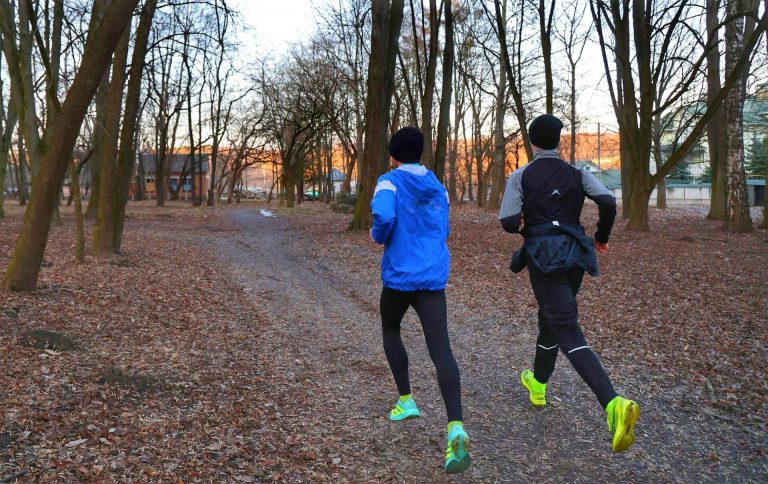
Dawn patrol: undignified alarm times, dignified splits.
If you want to keep your training plan on track without wrecking a summer of consistent mileage, it’s worth reading our piece on staying consistent with running even when you really don’t fancy it, because heatwaves are exactly the sort of thing that derails good habits if you let them. And if you’re using a watch to manage all this, our comparison of the best running apps in the UK covers which platforms actually flag heat stress usefully, rather than just telling you your VO2 max has taken a hit (thanks, we noticed).
Frequently Asked Questions
Is it safe to run in a UK heatwave at all?
Generally yes, provided you adjust your pace, timing and hydration. The main risks are heat exhaustion and heatstroke, so if you feel dizzy, nauseous, or stop sweating, stop immediately, find shade, and cool down. If in doubt, treat it as a proper medical concern rather than something to push through.
What is the best time to run in summer heat in the UK?
Before 8am or after 7pm is generally safest, since the sun is lower and the tarmac hasn’t had all day to bake. Midday running during an active heat warning is best avoided altogether, even if your training plan says otherwise.
How much water should I drink before a hot weather run?
Sip steadily in the hours before rather than downing a huge amount right before you leave. For runs over an hour, carry water or plan a route with refill points, and consider electrolytes if you’re a heavy sweater.
Should I slow down when running in a heatwave UK style?
Yes, significantly. Expect your normal easy pace to feel harder, and adjust by effort or heart rate rather than chasing your usual splits. Trying to hold race pace in serious heat is how people end up sat on a kerb regretting their life choices.
Can heat training actually help my race performance later?
There’s decent evidence that deliberate, gradual heat exposure improves plasma volume and sweat response, which can help on warmer race days later in the year. It should be done gradually and sensibly though, not by accident during a random July heatwave because you forgot to check the forecast.
The Verdict
Running in a heatwave UK style is doable, occasionally even enjoyable, but it comes with real trade-offs. This is best suited to runners willing to shift their schedule, slow down without sulking, and take hydration seriously rather than as an afterthought. It’s probably not for you if you refuse to run before 9am on principle, or if you have an underlying heart or respiratory condition, in which case a chat with your GP before pushing through extreme heat is the sensible move, not the boring one.
- Run early or late, not in the midday sun
- Hydrate steadily, not heroically
- Slow down and let your ego sit this one out
- Know the warning signs of heat exhaustion and stop if they appear
Fancy finding a cooler race to aim for once this heatwave finally breaks? Have a browse of upcoming UK running events and pick something that isn’t scheduled for the hottest week of the year.