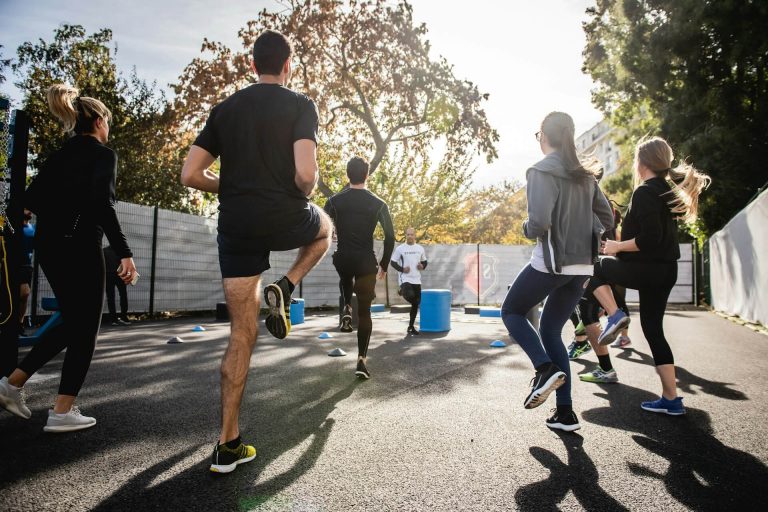
Strength Training for Runners: The Exact Exercises You’re (Probably) Skipping
It’s Wednesday evening. You had a vague plan to do some strength work after your easy 5K. Instead, you made a cup of tea, stared at the foam roller for four minutes, and watched two YouTube videos about marathon pacing before going to bed. Same. I have done this exact thing approximately forty-seven times.
Here’s the uncomfortable truth: strength training for runners is one of the highest-return things you can add to your week, and most of us – especially in the UK, where we seem to believe that more miles fixes everything – are completely skipping it. Not because we don’t know it matters. We know. We just… don’t do it.
So this is the guide for the rest of us. Not the athletes who already have a gym programme. The ones who run three or four times a week, vaguely know what a single-leg deadlift is, and still haven’t managed to string together a consistent session since approximately November.
Why Strength Training for Runners Actually Matters (Beyond the Obvious)
Yes, it helps prevent injury. You’ve heard that. But there’s more to it than just “strong glutes, happy knees.” Research published by Runner’s World shows that consistent resistance training improves running economy – meaning you use less energy at the same pace. That’s essentially free speed. Free. Speed.
It also helps with late-race form breakdown, which is what happens when your hips drop at mile 22 and your carefully planned marathon finish turns into a controlled collapse. Strong posterior chain, better posture under fatigue. Simple as that. Not glamorous. Effective.
The other thing nobody really mentions: it makes easy runs feel easier. When your single-leg stability is solid and your glutes are actually firing, the mechanical load of running drops. Your body has more capacity to spare. That matters enormously on back-to-back days or during a heavy training block.
The Exercises UK Runners Are Actually Missing
Let’s skip the stuff you already know in theory (squats, lunges, yes fine) and focus on the specific movements that most recreational runners neglect entirely. These are the gaps. These are the ones showing up in physio appointments at leisure centres across Britain right now.
1. Single-Leg Romanian Deadlift
This one does more for running than almost anything else in the gym. It targets the hamstrings, glutes, and the deep stabilisers around your hip – all of which are working hard every single stride. Most runners are quad-dominant (too much cycling, too many hills, not enough posterior chain work) and this corrects that imbalance directly.
Stand on one leg, hinge at the hip, extend the other leg behind you. Keep your back flat. Lower until you feel a pull in the back of the standing leg, then drive through the heel to stand. Start with bodyweight. Progress to a kettlebell or dumbbell in the opposite hand when it feels comfortable. Do 3 sets of 8-10 each side.
Fair warning: your balance will be embarrassing at first. That’s the point.
2. Copenhagen Adductor Hold
Almost nobody does this. Almost everyone who runs more than 30 miles a week probably should. The adductors (inner thigh muscles) are chronically underdeveloped in runners, and weak adductors are frequently implicated in groin strains, hip flexor issues, and the general kind of niggles that knock you out for two weeks in the middle of a training block.
Lie on your side. Place your top foot on a bench or chair. Lift your hips so your body is straight, supporting yourself on your elbow. Hold for 20-30 seconds each side. Progress to a full side plank with that top leg elevated. It’s harder than it looks. Genuinely.
3. Calf Raises (Done Properly)
Before you scroll past: I don’t mean the perfunctory ten reps you do on the edge of the stairs. I mean slow, loaded, single-leg calf raises with a full range of motion – heel fully dropped, all the way up onto the ball of the foot, three seconds down. Athletics Weekly has covered the evidence behind heavy, slow calf loading for Achilles tendon resilience extensively, and it’s compelling.
The Achilles is the most commonly injured tendon in distance runners. Loaded calf raises are one of the most evidence-supported ways to keep it healthy. Do 3 sets of 12-15 single-leg reps, slow and controlled. Add weight when it stops being a challenge.
4. Glute Bridges and Hip Thrusts
Yes, you know about these. But are you actually doing them? With load? Consistently? The glutes are the primary power generator in running and in most British club runners they are, diplomatically, underperforming. A simple double-leg glute bridge is fine for beginners. If you’ve been running for more than a year, you need single-leg variations or a barbell across your hips.
Three sets of 12 reps, squeeze at the top, don’t let your lower back do the work. Progress to single-leg. Then add a dumbbell. Then question your life choices as the DOMS sets in the next morning.
5. The Dead Bug
Core stability, not core strength, is what runners need. There’s a difference. Planks are fine but they train static stability. The dead bug trains anti-rotation and anti-extension – which is exactly what your core is doing while you run. Lie on your back, arms up, knees at 90 degrees. Slowly lower opposite arm and leg toward the floor without your lower back lifting. Return. Repeat. It’s called the dead bug because you look like one. Dignity optional.
How Often Should You Actually Do This?
Twice a week is the sweet spot for most club runners. Once a week is better than nothing. Three times starts eating into recovery if you’re also running four or five days. The NHS physical activity guidelines recommend strength training at least twice per week alongside aerobic exercise – and for runners, that aligns perfectly with what the evidence suggests.
Sessions don’t need to be long. Thirty minutes, focused, consistent, beats a ninety-minute session every three weeks when the guilt gets too much. Schedule it like a run. Put it in the calendar. Then actually do it instead of staring at the foam roller.
One realistic downside worth flagging: in the first two to four weeks of adding strength work, your running may feel worse. Your legs will be carrying more residual fatigue. This is normal and temporary. Push through it. The adaptation is coming.
If you’re currently building up your running base, have a look at our guide on types of running training to understand how strength work fits into the bigger picture alongside your easy runs, intervals, and long runs.
And if you’re heading toward a half or full marathon, strength work pairs directly with the kind of structured plan covered in our 12-week half marathon training plan for UK runners – it’s not an add-on, it’s part of the infrastructure.
A Simple Weekly Template
- Monday: easy run
- Tuesday: strength session A (single-leg RDL, glute bridge, dead bug, Copenhagen hold)
- Wednesday: intervals or tempo run
- Thursday: rest or easy jog
- Friday: strength session B (calf raises, hip thrust, lateral band walks, plank variations)
- Saturday: parkrun or long run
- Sunday: rest (actual rest, not “rest but I’ll squeeze in 5K”)
You don’t need a gym membership for any of the above. A kettlebell, a resistance band, and something sturdy to prop your foot against covers it. According to Garmin’s performance blog, runners who add even minimal resistance training show measurable improvements in running economy within six to eight weeks. Six to eight weeks. That’s less time than it takes to recover from a bad taper.
Real Talk
Strength training for runners works. The evidence is solid, the exercises aren’t complicated, and the time investment is genuinely small. And yet here we are. Most of us adding another easy 5K instead.
This is best for: runners who’ve been doing the same mileage for months without improvement, anyone with recurring niggles, and anyone training for a half or full marathon who wants to arrive at the start line structurally intact.
Who should probably approach with caution: complete beginners who are still building their running habit – don’t overload the plate. Add strength once you’re running three days a week consistently. Also, anyone expecting overnight results: this takes weeks to bed in, and the first fortnight may leave you waddling.
- Single-leg RDL: best bang-for-buck exercise for runners
- Copenhagen hold: the one everyone skips and everyone needs
- Slow, loaded calf raises: your Achilles will thank you eventually
- Twice a week, 30 minutes, consistent beats sporadic and heroic
- Expect a dip in running performance before the gains arrive
If you want to build this into a proper training structure, start with our no-nonsense guide to types of running training and stop winging it. Your future self – the one who finishes strong rather than shuffling across the line – will be insufferably smug about it.