Best Winter Running Gear UK: Stay Dry & Visible in the Rain
It’s officially Day 1000 of the British winter (not really, but it sure feels like it). Dawn leaks rain, our trainers are soggy before warm-up, and the internal debate over a 6 AM alarm is as fierce as any interval session. As club runners slogging through towpaths and parkruns, we need a game plan – or at least gear that doesn’t let us freeze or disappear into the mist. We’re talking the best winter running gear UK offers: from truly waterproof jackets to no-nonsense running in the rain tips and even hi-vis kit. Because yes, you will still get wet – but we’ll aim to keep it just “less wet” and your toes in one piece.
Waterproof Running Jackets vs. The “Less Wet” Myth
You’ve heard the promises: “breathable waterproof jacket” this, “DWR-coated magic” that. In reality, a fully waterproof jacket can feel like wearing a bouncy castle. It keeps rain out, but it also keeps sweat in. Many so-called waterproof shells rely on a durable water-repellent (DWR) coating or simple laminate. As the gear experts point out, a water-resistant jacket will fend off light showers but will eventually let you drink your own sweat in a downpour. A true waterproof shell (Gore-Tex, eVent, etc.) will keep the rain at bay, but you’ll overheat unless it has big vent zips. For example, Runner’s World explains that “water-resistant” fabrics can handle a brief drizzle, whereas fully waterproof jackets use membranes to seal out moisture entirely (at the cost of trapping some heat). The takeaway? In heavy UK rain, trust a proven waterproof jacket – just accept you’ll still end up a bit sweaty.
Decoding Jacket Ratings (10K, 20K, and DWR)
Jacket spec sheets love codes like “10K/10K” or “20K/20K”. These are metrics for water column resistance (first number) and breathability (second number). In plain English: 10K means the fabric can withstand a 10,000 mm column of water before leaking, while 20K is tougher. Runner’s World notes that higher numbers mean better resistance/breathability, but there’s no industry standard for “waterproof.” Even a 20K/20K jacket can eventually soak you if the effort is high and the vents are closed. Look for pit zips or mesh-lined pockets to dump heat. If the forecast is apocalypse-level rain, opt for “3-layer” waterproof fabrics or premium coatings – they’ll have taped seams and still let some sweat escape (if only grudgingly).
Essential Winter Running Gear for the UK
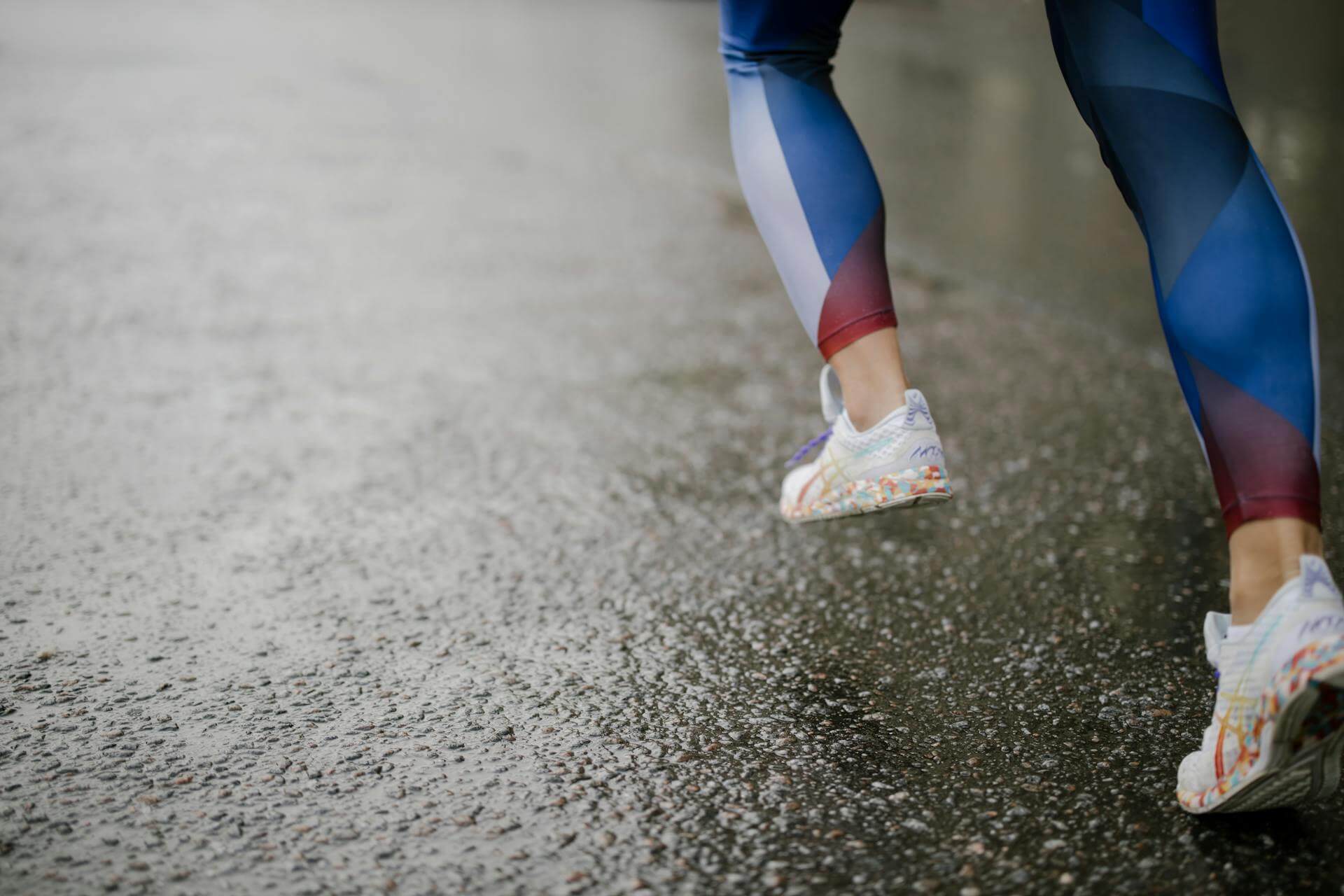
Beyond the jacket, think layers and visibility. A moisture-wicking base layer and a midlayer (like a thin fleece or warm top) help trap heat without adding bulk. Thermal running tights or leggings keep your legs warm, and a windproof gilet can be lifesaving in a gale. Don’t forget gloves and a hat – once fingers or ears go numb, your pace will drop faster than your coffee’s temperature. Waterproof trail shoes or wetsuit-like socks save your toes (and nails!).
- Waterproof/Windproof Jacket: Look for “waterproof” in the spec (not just water-repellent). Jackets with taped seams, hood adjusters and pit zips are gold.
- Layers: Merino or synthetic base layers and a thermal mid-layer. Long sleeves and tights. Cotton is a no-go: it soaks up water and chills you.
- Shoes and Socks: Trail or road shoes with good tread, and an extra pair of socks. Wet feet mean blisters and black toenails. Some runners even wear waterproof gaiters or rain-proof socks.
- Accessories: Gloves (thermal or waterproof), a beanie or buff, and shoe covers if it’s pouring. A brimmed cap under your hood can stop rain beating you in the face.
- Lights and Visibility: High-vis jacket or vest, reflective strips, or clip-on blinker lights. A head torch is non-negotiable for dark mornings. As one UK health guide bluntly puts it, “Be visible … wear a head torch and high-vis clothing.”Health experts even insist on it for night/dawn runs.
- Hydration & Nutrition: Water bottles are heavier when full, but cold air can dehydrate you fast. Insulated bottles or packs help. Fuel is crucial – eat a carb-rich meal 2-3 hours before (porridge or pasta), and carry gels/gummies. Remember the long-run hacks: one idea is the “parkrun sandwich” – run to a local 5K parkrun, jog the 5K, then run home (and grab that post-run coffee).
Running in the Rain Tips
With gear sorted, time your mental prep. Cold rain can shock your system, so warm up indoors if possible. Start the run cooler than you think you should – you’ll heat up quickly. Watch your footing: puddles can hide potholes (ankle sprains don’t make great anecdotes). After intense rain, avoid ice: if it’s freezing, consider a treadmill or swap for a cross-training day (health pros warn the slip-and-strain risk isn’t worth it).
- Stay Dry (ish): Let the jacket do its job – it might feel clammy, but it’ll keep the real rain off. Vent aggressively (open zips, pockets) to let sweat escape. If you’re drenched, wring out your gloves and buff mid-run (yes, soggy sleeves are a freedom statement).
- Mind Over Matter: Use the soggy misery. Own the fact you’re tougher for this. Pace yourself – it’s easy to overexert in cold, so chat with a clubmate or listen to tunes at a manageable tempo. If your stomach feels dodgy, simmer down and walk until it settles. No point conquering a marathon if you’re making trails in someone’s hydrating station.
- Route Hacks: Plan well-lit routes and run against traffic where possible. Stick to known paths and avoid hill repeats on slippery leaf-strewn slopes. If the local canal towpath turns into a canal, detour to the roads.
- After Run: Change out of wet gear immediately. A hot shower (or ice bath if you’re that sort of masochist) and calories are legal forms of reward. Dry your trainers by stuffing with newspaper, and maybe rotate in an old pair so you’re never in a damp disaster.
- Buddy Up: If motivation or safety is an issue, call in reinforcements. A running partner or club group can keep you accountable – and double your chance of getting that post-run pastry.
Hi-Vis Running Gear: Stay Seen in the Dark
Winter means early nights and murky dawns. Hi-visibility kit is less about fashion and more about not being roadkill. Think neon yellows, oranges or pinks with 360° reflective tape. The UK Health and Safety Executive recommends hi-vis clothing meet BS EN 471 standards (with Class 3 visibility being the best). In practice, a hi-vis vest or jacket is a must for any road or shared-path run after dark. Pair it with a flashing LED armband or headlamp. You don’t just want drivers to see you – fellow runners and cyclists will thank you, too. A simple tip: prop the torch on your head with the beam angled down – it illuminates potholes and makes you extra noticeable.
And yes, clubs often hand out fluorescent shoe laces and hats like political campaign stickers. Embrace the neon. We’d rather look silly in hi-vis than run into an Audi. In short: layering is great, but make sure your outermost layer is bright and reflective.
Real Talk: The Takeaway
No kit will completely eliminate the British winter, but the right gear makes it a bit less of an ordeal. Key points: opt for a genuinely waterproof jacket (Gore-Tex or similar) if you run through monsoons; stash extra socks and a torch in your pack; and absolutely invest in hi-vis strips or a fluorescent vest (it literally could save your life). Master these, and you’ll emerge from winter a stronger, harder runner – even if you’ve gained a few black toenails as badges of honour.
For more running wit and wisdom, swing by our parkrun antics or check out our long-run fuel guide. Or better yet, grab a mate and join a local club – misery loves company, after all. Keep calm and carry on running (with a poncho in your pocket).