Best Running Belt UK: Carry Your Phone, Keys and Dignity Simultaneously
Table of Contents
Right. So you’ve got a training plan, a pair of shoes that cost more than your first car, and a brand new phone the size of a small chopping board. Now comes the real challenge: what on earth do you do with all of it when you go for a run? You could hold your phone in your hand for 10 miles like some sort of sweaty statue. You could stuff your keys in your shorts pocket and accept that one of them will lacerate your thigh by mile three. Or – and here’s the genuinely good news – you could invest in the best running belt UK runners are actually using right now. In this guide, we test the top bounce-free options for accommodating large smartphones, silencing jangling keys, and keeping you from looking like you’ve just escaped a car boot sale. A good best running belt UK choice makes a real difference on race day and your long run alike. Let’s get into it.
Why You Actually Need the Best Running Belt UK Has to Offer
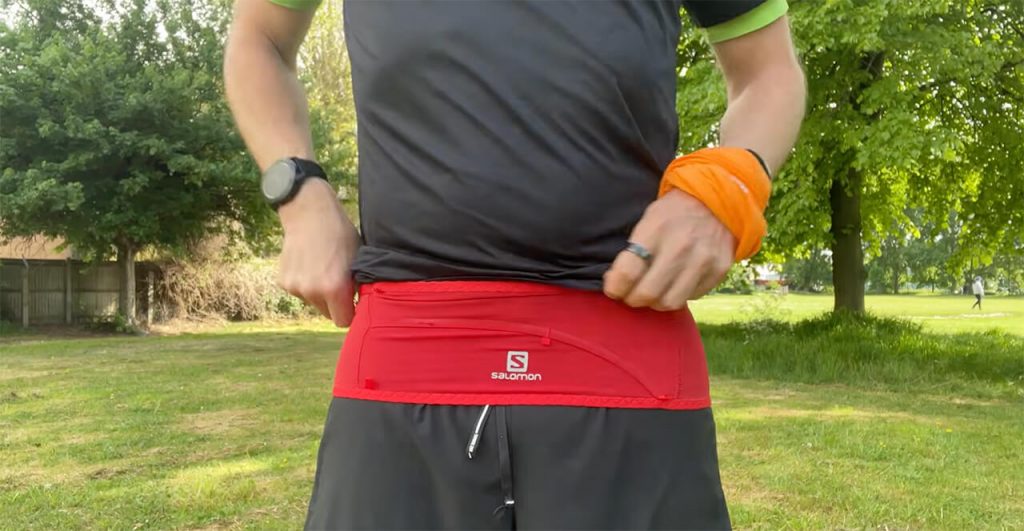
Let’s be honest with each other. Nobody looks cool wearing a running belt. It is not the aesthetic. But neither does grimacing because your house key has been slowly drilling into your hip flexor since the second kilometre. The running belt exists to solve a very real problem: modern life requires you to carry stuff, and running shorts were designed by people who clearly never needed to carry anything larger than a Chewit.
Modern smartphones – your iPhone 15 Pro Max, your Samsung Galaxy Ultra, whatever enormous slab of glass you’ve chosen – simply do not fit in a standard shorts pocket. And even when they do technically fit, they bounce. Mercilessly. Up, down, slap, repeat. Your running phone holder needs to actually hold your phone still. Not wrestle it into submission while it slowly escapes out the bottom like a very expensive salmon.
Beyond the phone, there’s the keys situation. The jingle. The relentless, maddening jingle that announces your presence to the entire neighbourhood at 6am on a Sunday. A decent running pouch for keys will silence them completely – most good belts have a small internal zip pocket or a clip hook specifically for this. Bliss.
What to Look for in a Running Waist Belt
- A main pocket wide enough for your specific phone model – measure before you buy, and add a couple of millimetres for a case
- A secure zip or magnetic closure that won’t ghost you mid-tempo run
- A dedicated key clip or small zip pocket so you’re not rummaging around in the dark at mile nine
- Adjustable elastic waistband that fits snugly without cutting off circulation to anything important
- Sweat-resistant or water-repellent lining – because UK weather is UK weather
- Minimal bounce at your normal training pace and at race pace – ideally test it on a short run before committing it to a long run
- Light enough that you forget it’s there, heavy enough to actually hold things
One genuine downside to flag early: no running belt is truly invisible. If you’re wearing a tight-fitting race kit or a club vest on race day, a bulky waist pack will show. It’s a small vanity tax. Worth it to have your Spotify, your emergency fiver, and your house key, but worth knowing upfront.
The Best Running Belt UK Runners Are Actually Using: Our Top Picks
We’ve tested these on everything from a brisk parkrun to a 20-miler in persistent drizzle – which, if you’re UK-based, is basically just called “autumn”. Here are the standout options across different budgets and use cases.
1. Flipbelt Classic – The Reliable All-Rounder
The Flipbelt has been around long enough that it’s basically the Brooks Ghost of running belts: not exciting, universally respected, gets the job done. It’s a tubular design that sits flat against your body, with openings around the circumference so you can slide things in and out without stopping. It accommodates most large smartphones (though very wide cases can be a squeeze), and the key loop inside is genuinely useful.
The downside? It’s not the easiest to access while moving. You’ll want to practise opening it before race day. Also, if you overload it, things can and will shift around. Load it sensibly and it’s excellent. Treat it like a grocery bag and you’ll regret it somewhere around mile 15.
2. SPIbelt Original Running Belt – The Lightweight Choice
The SPIbelt (Small Personal Item Belt) is a compact single-pouch option that sits at the small of your back or just below your waist. It’s expandable, so it accommodates surprisingly large phones despite looking modest when empty. It’s the sort of running phone holder that disappears under a race vest completely.
Genuinely minimal bounce at steady paces. Gets a bit bouncier at 5K race effort if it’s heavily loaded. Best for: runs where you want your phone and one gel, not your entire pre-race kit bag.
3. Nathan Hipster 2 Running Belt – The Feature-Packed Option
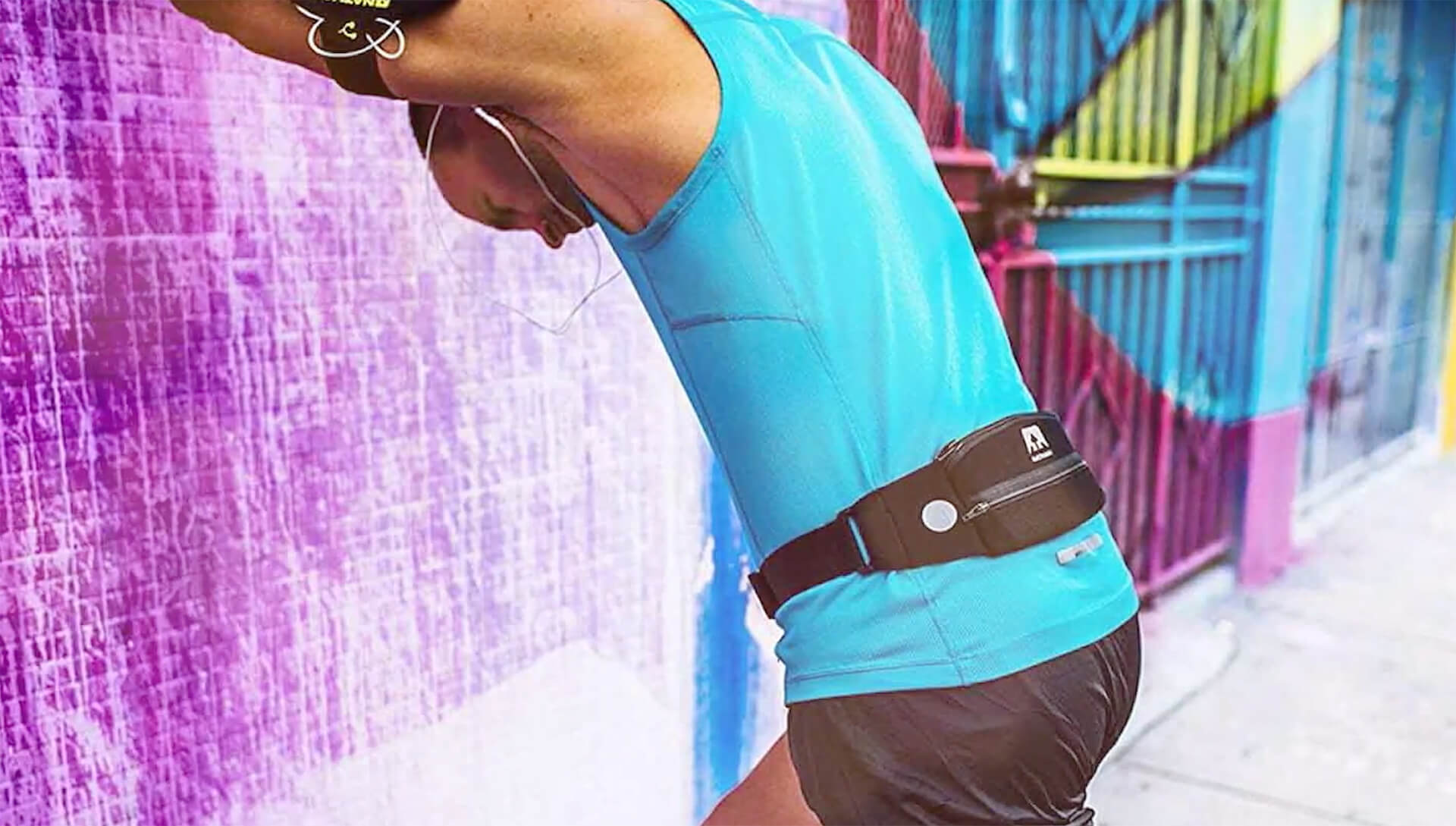
Nathan make solid, no-nonsense running gear, and the Hipster 2 is their answer to the “I need to carry a lot of stuff” problem. It has multiple pockets – a main phone-sized zip compartment, a smaller zip pocket for keys and gels, and a front quick-access mesh pocket. The waistband is wide and sits across the hips rather than the waist, which distributes weight better on longer efforts.
It is slightly bulkier than the others. It shows more under a fitted vest. But for a marathon long run where you want fuel, phone, keys, and maybe a small emergency snack (no judgement), it earns its place.
4. Decathlon Kalenji Running Belt – The Budget Hero
If you’re not ready to commit fifteen to twenty-five quid to a belt before you know if you’ll even use it, Decathlon’s own-brand Kalenji option is a perfectly serviceable starting point. It fits most mid-sized phones, has a small key pocket, and doesn’t bounce offensively at easy paces.
The zip quality is not quite at the level of the more premium options, and the capacity is limited. But as a first running pouch for keys and a phone on your commuter runs? Genuinely hard to argue with the price point. Just don’t ask it to hold your iPhone 15 Pro Max in an Otterbox. It won’t.
5. Naked Running Band – The Elite Option
For those who’ve tried everything and want a belt that genuinely vanishes against your body, the Naked Running Band has developed a cult following among distance runners. It’s a wide, stretchy band with multiple small pockets distributed around the circumference. Completely flat, almost zero bounce, and the stretch material means it adjusts to your breathing naturally.
It is pricier. And if you run with your phone in a substantial case, you may find the individual pockets on the smaller size too snug. Size up if in doubt. But for marathon training and long ultras, this is genuinely as close to “forgetting you’re wearing a belt” as you’ll get.
Running Belt UK Comparison: Which One Should You Actually Buy?
Here’s a quick at-a-glance comparison of the five options we’ve covered, so you can match the right belt to your actual use case rather than just buying the one with the nicest photo on Amazon.
| Belt | Best For | Large Phone Fit | Key Storage | Bounce Level | Approximate Price |
|---|---|---|---|---|---|
| Flipbelt Classic | Everyday training runs | Good (no case = best) | Internal loop | Low | around £25 |
| SPIbelt Original | Lightweight race day carry | Good (expandable) | Internal clip | Low-medium | around £20 |
| Nathan Hipster 2 | Long runs with lots of kit | Excellent | Dedicated zip pocket | Low (hip-riding fit) | around £30 |
| Decathlon Kalenji | Budget-conscious beginners | Medium (standard phones) | Small zip pocket | Medium | around £8-12 |
| Naked Running Band | Minimalists and ultra runners | Good (varies by pocket size) | Multiple pockets | Very low | around £50-60 |
If you’re building up to your first half marathon or marathon, pairing a running belt with a solid training plan and the right gear makes race day much smoother. Take a look at our guide to what your first half marathon race day actually feels like – there’s a lot more to prepare for than just what to carry.
Tips for Getting the Most From Your Running Phone Holder
Buying the right belt is step one. Actually making it work for you is step two. Here are a few things that genuinely help, learned through the time-honoured tradition of getting it wrong first.
- Always test a new belt on a short run before a long run – bounce problems show up immediately, and you’d rather find out at mile one than mile fourteen
- Remove your phone case if you’re near the limit of the pocket – a naked phone slides in and out much more easily, and most running belts protect the phone reasonably well on their own
- Use a key clip or the dedicated key pocket – loose keys rattle and eventually scratch your phone screen through the pocket lining
- Tighten the belt until it sits snugly but doesn’t compress your stomach – too loose means bounce, too tight means you’ll spend the whole run breathing like you’re attempting a 400m PB
- Rotate the belt so the main pocket sits at the small of your back rather than your front if you find frontal bounce is an issue at pace
- On hot runs, flip the belt to sit over a base layer rather than directly on skin – some people find the elastic waistband irritates bare skin after an hour or more
For more on getting your kit sorted before race day, our running gear guides cover everything from shoes to socks to what to eat at 5am before a marathon.
It’s also worth knowing that race organisers don’t always allow large waist packs at the start line – some events ask you to keep bags in the baggage drop. For events like those covered in our best UK marathons for beginners guide, check the specific race kit rules before you decide what to carry on the day.
Running Pouch for Keys: The Specific Problem Worth Solving Properly
It deserves its own section. The key jingle is a specific, solvable problem that a surprising number of runners just… tolerate. You don’t have to. Here’s what actually works.
The best running pouch for keys either has a dedicated internal clip (so the keys hang still and don’t rattle against anything), or a small zip pocket completely separate from the main phone compartment. Avoid belts where your keys and phone share a single pocket – they will scratch each other, jangle constantly, and you’ll feel every bump. Not ideal when you’re trying to zone out at easy pace.
If your belt doesn’t have a key clip, a simple carabiner attached to an internal loop solves the rattle almost entirely. Low-tech, very cheap, completely effective. Runners have been doing this with race vests for years.
A small piece of foam wrapped around your keys – or even a key sock, which is exactly what it sounds like – adds another layer of silence if you’re carrying multiple keys. Slightly embarrassing to explain at work. Completely worth it on a 6am Sunday long run when the rest of the street is asleep.
Frequently Asked Questions
What is the best running belt for a large phone in the UK?
For large phones (iPhone Pro Max, Samsung Galaxy Ultra and similar), the Nathan Hipster 2 and the Flipbelt Classic offer the most reliable fit. The Nathan Hipster 2 has a dedicated large zip pocket that accommodates most phones even in slim cases. The Flipbelt works best for phones without a case, or with very slim cases. If budget is a priority, the SPIbelt’s expandable design handles most large phones surprisingly well for the price.
Will a running belt bounce on a long run?
All running belts bounce to some degree – the question is how much. The key factors are fit (too loose equals more bounce), load (overfilling any belt makes it bounce more), and design (wide hip-riding belts like the Nathan Hipster 2 and the Naked Running Band bounce the least). Test your belt loaded with your actual race kit on a short run at race pace before committing it to a marathon training run.
Can I use a running belt at a race or parkrun?
For parkrun, absolutely – there are no kit restrictions, and plenty of runners use belts to carry their phone for Strava tracking or music. For road races, almost all UK events allow running belts and waist packs. Some trail ultras have specific kit requirements, and a few city marathons ask you to use the baggage drop for anything larger than a race vest. Always check the specific race information for the event you’re entering.
Are running belts safe for carrying a phone?
A properly fitted running belt protects your phone well on normal road and trail runs. The main risks are sweat ingress (look for belts with water-resistant lining if you run in heavy rain), and the phone falling out if the zip or closure fails mid-run. Choose a belt with a reliable zip mechanism, test it before race day, and if you’re particularly precious about your phone, a small zip-lock bag inside the belt pocket adds a layer of waterproofing at essentially zero cost.
How do I stop my keys jangling in my running belt?
Use the dedicated key clip or small zip pocket if your belt has one. If it doesn’t, a small carabiner attached to any internal loop will hold keys still and reduce rattle significantly. Wrapping a thin hair band around your keys bunches them together and absorbs vibration. For complete silence on a very long run, a small key sock (a thin fabric pouch for a single key) is the nuclear option – low dignity, maximum effectiveness.
The Verdict
A good running belt is one of those bits of kit you’ll wonder how you ever ran without. The right one disappears against your body, silences the key jingle, and keeps your enormous phone accessible without slapping your hip for ten miles. The wrong one bounces, chafes, and slowly ruins your relationship with long runs.
For most UK runners, the Flipbelt Classic or SPIbelt will cover 90% of use cases at a reasonable price. Go Nathan Hipster 2 if you carry a lot on long runs. Splash out on the Naked Running Band if you’ve tried everything else and bounce is still ruining your life. Start with Decathlon if you’re not sure you’ll commit to the whole belt lifestyle.
- Best all-rounder: Flipbelt Classic
- Best for large phones: Nathan Hipster 2
- Best budget option: Decathlon Kalenji
- Best for minimalists: SPIbelt Original
- Best for zero-bounce distance running: Naked Running Band
- Realistic downside: no belt is invisible, and all of them require a short adjustment period to find the right fit and position
Ready to sort the rest of your running kit? Head over to our running gear section for more honest, slightly sarcastic reviews from people who have definitely made all the mistakes so you don’t have to.