Running Etiquette UK: The Unspoken Rules of Parkrun and Pavements
Table of Contents
Nobody hands you a rulebook when you lace up your first pair of running shoes. There is no induction day, no laminated card in the box, and absolutely no one is going to sit you down and explain the finer points of running etiquette UK runners have quietly agreed on over decades of pavement-pounding and parkrun tourism. You are simply expected to know. And if you do not know – well, you will find out the hard way, via a passive-aggressive sigh from a faster runner you just accidentally blocked on a narrow towpath, or a very pointed look at your headphones from a club runner who clearly wanted to exchange pleasantries about splits.
Consider this your unofficial guide. Part public service, part confessional. I have committed most of these sins myself.

Why Running Etiquette UK Actually Matters (More Than You Think)
Running is, on the surface, a wonderfully solitary sport. Just you, the road, and the increasingly urgent question of whether you left the oven on. But the moment you step outside, you are sharing space. Pavements, parks, canal paths, race corrals – all of it is shared. And shared spaces require a loose social contract, or things descend rapidly into chaos and mild fury.
Good running etiquette is not about being prim. It is about not being the person everyone quietly complains about at the post-parkrun coffee. It is about making running – a sport that already has a fairly steep barrier of entry in terms of self-inflicted suffering – a bit more pleasant for everyone involved. Including you.
The good news is the rules are mostly common sense. The bad news is that common sense, as we all know, is not that common. Especially at 8:58am on a Saturday morning when you are half-asleep, slightly underdressed for the wind chill, and wondering why you did not just stay in bed with your Runner’s World subscription and a cup of tea.
The Pavement Hierarchy: Runners, Dogs, and Joggers-with-Prams
First, an uncomfortable truth: you do not own the pavement. Neither does the dog walker with three spaniels on extending leads, though they often behave as if they do. The pavement is a shared, chaotic, wonderful mess of pedestrians, cyclists who have given up on the road, and the occasional extremely ambitious mobility scooter.
The golden rule is simple: keep left. If you are in the UK, this should be instinctive – we drive on the left, we queue on the left, we stand on the left on escalators (in London, anyway – elsewhere, this rule breaks down completely and it is every person for themselves). Running is no different. Keep left, leave space on the right for overtaking, and do not – under any circumstances – stop dead in the middle of the path to check your GPS watch without at least a glance behind you first.
If you are running in a group – and I say this with love, having run in many groups – please do not run three or four abreast and force oncoming pedestrians into the road. You are a running group, not a moving roadblock. Single file or pairs, especially on busy paths. Your banter can survive the temporary reconfiguration, I promise.
Parkrun Rules: The Ones Nobody Officially Wrote Down
Parkrun is, by almost any measure, one of the greatest things to happen to British running in the last two decades. It is free, it is friendly, it is timed, and it features a genuinely impressive concentration of people in high-visibility vests doing acts of selfless volunteering before most of the country has had breakfast. It is brilliant. It also has a set of unofficial parkrun rules that nobody quite spells out, but which are understood by every regular.
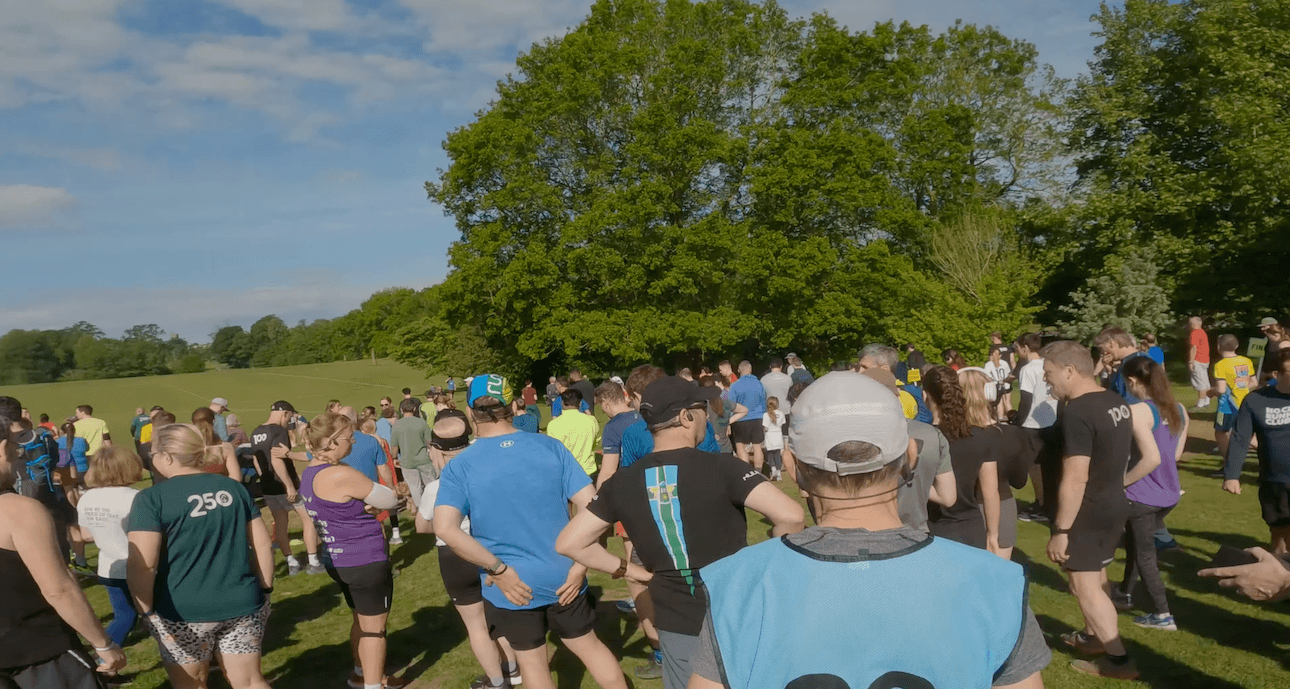
- Do not line up at the front of the start funnel if you are planning to run 35 minutes. The front is for people chasing a sub-20. If you are not sure where you should be, hang back and let the nervous energy sort itself out naturally.
- Do not wear headphones if you are a first-timer or still learning the course. Parkrun is a community event. The marshals shout directions. You need to hear them, and also the heartfelt encouragement of a stranger who has absolutely no idea who you are but is very proud of you anyway.
- Barcode, barcode, barcode. Forget it and you ran for nothing. Well – not nothing, you ran for your health and all that. But the chip time will not be recorded, and that is genuinely gutting when you have just smashed a PB.
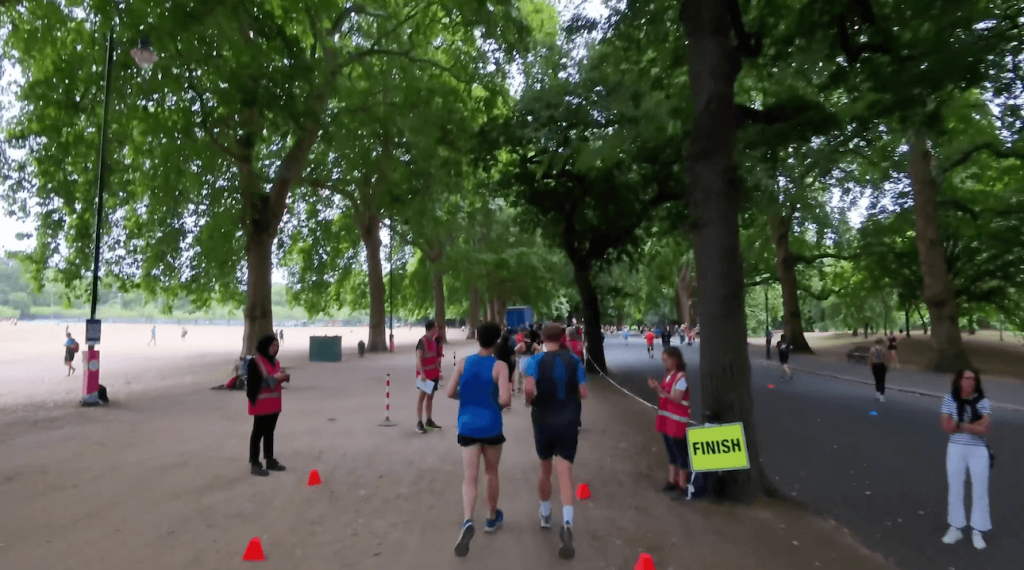
- Thank the volunteers. Every single one. They gave up their Saturday morning so you could run around a park and feel smug about it. The least you can do is say thank you at the finish funnel.
- Do not sprint past someone in the final 100 metres if they are clearly using every last bit of energy they have to finish. Unless they are in your age category and you are chasing an age grading point. In which case, go on then – but make it clean.
Parkrun also has some official guidance on the parkrun website that is worth a read, particularly around headphone use and course etiquette. It is more relaxed than you might expect, which is rather the point.
Headphone Etiquette: The Most Divisive Topic in Running
Ah, headphones. The running community’s equivalent of pineapple on pizza. Strong opinions. Deeply held. Slightly exhausting.
Here is the sensible middle ground. Headphones are fine. Music, podcasts, the audiobook you have been meaning to finish for six months – all fine. What is not fine is wearing headphones in a way that makes you completely unaware of your surroundings. One ear out on busy paths. Volume low enough to hear a shout. Full awareness that other runners may be trying to pass you, and that a polite “on your left” should register as something other than background noise.
At races, check the specific race rules. Some events (particularly those on closed roads) permit headphones. Others strongly discourage them, especially where marshals need to communicate directions. The England Athletics affiliated events tend to signal their headphone policy in the race information – actually read it before race day rather than discovering the rule at the start line and having to awkwardly stuff your earbuds into your bumbag.
Passing Other Runners: The Art of the Polite Overtake
Overtaking is a fundamental part of running. Faster runners exist. Slower runners exist. Sometimes you are the faster one. Sometimes – and this is a humbling experience I have had more times than I care to admit – you are emphatically not.
The rules for passing other runners are straightforward in theory and occasionally chaotic in practice.
- Announce yourself if you are coming from behind, especially on paths where the other person may not hear you approaching. A simple “just coming past” or “on your left” is plenty. You do not need to give a full briefing, just enough warning that they do not lurch sideways into you in surprise.
- Give a wide berth when overtaking. Do not squeeze past with three centimetres of clearance. Give them room, complete the overtake cleanly, and move on with your life.
- Do not slow down immediately after overtaking. If you have surged past someone, keep that pace. Slowing down ten metres later is deeply demoralising for the person you just passed and forces an awkward series of re-overtakings that nobody enjoys.
- At races: respect the race corral system. Start in the right pen for your expected finish time. It exists so that faster runners are not weaving through crowds of slower ones in the opening mile, which is exhausting for everyone and genuinely dangerous when the field is dense.
- On narrow paths: sometimes you cannot overtake safely. Accept this with grace. Tuck in, recover slightly, and wait for a gap. It is not a personal affront. It is just geography.
If you are the person being overtaken, try not to immediately respond by speeding up. I know. I know it is tempting. Your pride is engaged. But chasing someone who just passed you and then blowing up spectacularly three minutes later is a well-documented running mistake and also, frankly, a bit embarrassing. Stick to your pace. Your training plan consistency will outlast their momentary burst of enthusiasm.
Race Day Etiquette: Start Pens, Gels, and General Conduct
Race day brings its own specific flavour of etiquette challenges. The nervous energy, the crowds, the slightly chaotic pre-race logistics – it can all conspire to make people act in ways they would never dream of on a quiet Tuesday morning run.
| Situation | Wrong Move | Right Move | Why It Matters |
|---|---|---|---|
| Start pen position | Lining up in the sub-40 pen with a 55-minute 10K PB | Start in the pen matching your realistic finish time | Prevents dangerous congestion and frustrating weaving in early miles |
| Gel packets and litter | Dropping empty gel wrappers wherever you finish with them | Hold the wrapper until a bin or use race-provided collection points | Basic decency; race volunteers clean it up if you do not |
| Water station behaviour | Stopping dead at the front of the water table | Grab your cup and move to the side before drinking or slowing | Prevents pile-ups and keeps runners behind you safe |
| Acknowledging marshals | Ignoring them entirely while staring at your watch | A nod, a wave, or a gasped “thank you” goes a long way | Volunteers keep races running; basic gratitude costs nothing |
| Chip time vs gun time | Complaining your chip time is slower because you started at the back | Use your chip time (which starts when you cross the mat) as your real result | Chip timing exists precisely so position at the start does not penalise you |
One underrated piece of race day etiquette: if a pacer is going too slowly for you, pass them – but do not then tuck in three metres ahead of them and run their exact pace for the next ten kilometres. Either you want the pacer’s service or you do not. Hovering in no-man’s land just confuses everyone and messes with the pacer’s sense of where their group actually is.
Acknowledging Other Runners: The Nod, the Wave, and the Breathless Grunt
This is perhaps the most culturally specific point in the entire guide. In the UK, there is a deeply ingrained reluctance to acknowledge strangers in public spaces. And yet, among runners, a loose acknowledgement culture exists and is broadly observed.
The nod is the gold standard. A slight dip of the chin as you pass another runner coming the other way. It says: I see you, I respect the effort, we are both doing this stupid wonderful thing, carry on. It costs approximately zero energy and produces a small but genuine moment of human connection.
The wave is for when you know the person slightly – perhaps a familiar face from your local parkrun – but not well enough to stop and have a conversation (which, mid-run, you would not want to do anyway).
The breathless grunt is entirely acceptable at mile 23 of a marathon. Nobody expects full sentences at that point. A glance and a wheeze is sufficient.
What is not acceptable: staring blankly through another runner as if they are made of glass while they cheerfully wave at you. This is deeply demoralising. You do not have to be a social butterfly. Just acknowledge the existence of your fellow sufferer. It takes a fraction of a second and it matters more than you might think. As Athletics Weekly has noted, the running community’s reputation for warmth and inclusivity is one of its greatest assets – do not be the one who chips away at it.
If you want to understand more about how your parkrun performance stacks up against other runners in your age group, our guide to parkrun age grading breaks down what that mysterious percentage at the bottom of your results email actually means.
Frequently Asked Questions
Is it rude to wear headphones at parkrun?
Not inherently – parkrun does not ban headphones. However, wearing both earphones at full volume is generally considered poor form. It makes you less aware of marshals, fellow runners trying to pass you, and the general bustle of the event. One ear out, volume sensible, and you will fit in absolutely fine. Many regulars choose to run headphone-free at parkrun precisely because the community atmosphere is part of the appeal.
What is the correct way to overtake another runner on a pavement?
Give a brief verbal warning (“on your left” or “just coming past”), leave a decent gap when you pass, and then maintain your pace after the overtake. Do not squeeze past silently and do not slow down immediately after passing them. If the path is too narrow to overtake safely, tuck in and wait for a gap rather than forcing it. Patience is a virtue, especially when the alternative is a collision.
Should I start at the front of a race even if I am fast?
Start in the pen that matches your realistic expected finish time – not your best-ever chip time from five years ago on a pancake-flat course in perfect conditions. Race organisers set corrals to make the event safer and more enjoyable for everyone. Starting too far forward creates congestion and means you spend the early miles dodging people, which is neither efficient nor particularly fun. If there are no corrals, seed yourself honestly.
Do I have to acknowledge other runners when I pass them?
There is no law requiring it, and on a busy city pavement at rush hour the expectation is lower. But on quieter routes, trails, and at events like parkrun, a nod or brief acknowledgement is widely observed running etiquette in the UK. It is one of those small social glues that makes the running community feel genuinely welcoming rather than a collection of individuals who happen to be moving in the same direction.
What should I do with my gel packets during a race?
Hold them. Tuck the empty wrapper into your shorts, your vest pocket, or your bumbag until you reach a bin or a race-designated collection point. Dropping them on the course is littering, and it creates a slip hazard for runners behind you. Most races provide collection bins near water stations for exactly this purpose. It is a small thing that makes a meaningful difference to the people cleaning up after the event – and to the local community who will be using that road or path the following morning.
The Verdict
Running etiquette UK-style is not complicated. It is mostly just being a considerate human being while also moving faster than a walk – which, granted, is occasionally harder than it sounds when you are at mile 24 and your brain has mostly checked out.
This guide is for anyone who has ever felt vaguely uncertain about the unwritten rules of running in public – which is most of us, if we are being honest. It is also a gentle nudge for the runners who already know the rules and occasionally choose to ignore them. You know who you are. We all do.
Who should probably think hardest about this: newer runners getting to grips with race day logistics, and anyone who has been running solo for years and is now venturing into group events or parkrun for the first time.
Realistic downside: learning these norms takes time and there will be awkward moments. Someone will shout at you for being in the wrong corral. You will forget your barcode at least once. These are rites of passage.
- Keep left on shared paths and announce overtakes clearly
- Start in the correct race pen for your realistic finish time
- Wear headphones with awareness, not as a sensory blackout
- Thank volunteers – every time, without exception
- Acknowledge fellow runners – the nod costs nothing
- Take your gel wrappers with you until you find a bin
Now go enjoy your run – and if you are heading to a new parkrun for the first time, our ultimate guide to parkrun tourism in the UK will help you find a course worth travelling for.