Your First Half Marathon Race Day: What No Training Plan Actually Prepares You For
You’ve done the training. You’ve eaten the pasta. You’ve taped parts of your body you didn’t previously know existed. Your first half marathon is tomorrow, and you’re feeling… fine. Completely fine. Not at all lying awake at 1am Googling “is it normal to need the loo seven times before a race.” Everything is absolutely under control.
Here’s the honest truth: no training plan prepares you for race day itself. The 12-week schedule tells you how many miles to run, but it doesn’t tell you why the start pen smells like Deep Heat and mild panic, or what to do when your Garmin refuses to find a satellite while 4,000 people shuffle past you. This guide fills in the gaps – because your first half marathon deserves better than a nasty surprise at mile nine.
Race Day Morning: The Hours That Feel Longest
Set your alarm for two hours before your start time. Then set a backup. Then lie awake from 4am anyway, which is fine – everyone does it. Your body doesn’t need extra sleep; it needs fuel and a functioning nervous system.
Breakfast: Boring Is Beautiful
Eat what you trained on. Race day is not the morning to try the hotel’s smoked salmon eggs Benedict. Porridge, toast, a banana – something your gut recognises. Aim to eat around 90 minutes before your start time to give everything time to settle. And yes, you will probably still need the loo three times. That is normal. That is universal. The queues for race-day Portaloos are a great leveller of humanity.
Caffeine: if you train with coffee, have your coffee. If you don’t, skip it – race morning is a terrible time to experiment with stimulants.
First Half Marathon Kit: Don’t Save Anything for Best
Everything you wear on race day should have been worn on a long run before. Everything. The “never wear new kit on race day” rule exists because someone, somewhere, learned the hard way at mile seven with a brand new sports bra. Don’t be that person.
- Shoes: worn-in, not brand new. If you’re eyeing up a carbon-plated super shoe, make sure you’ve done at least two or three long runs in them first – the geometry is very different from a standard trainer and the 4-8mm drop change can be brutal on your calves if you’re not prepared.
- Socks: proper running socks, not cotton. Blisters are optional. Choose not to have them.
- Shorts or tights: anything with inner thigh seams that rubs for 13.1 miles is your enemy. Vaseline is your friend. Apply liberally and with zero shame.
- A bin bag or old jumper: most UK half marathons start outdoors in weather that oscillates between “brisk” and “actually horrible.” Wear something throwaway to the start, drop it before you cross the line – it usually gets donated to charity.
Need guidance on what shoes actually make sense at this stage? Our guide to the best running shoes for beginners in the UK covers exactly that without the hard sell.
The Start Pen: Chaos, But Make It Organised
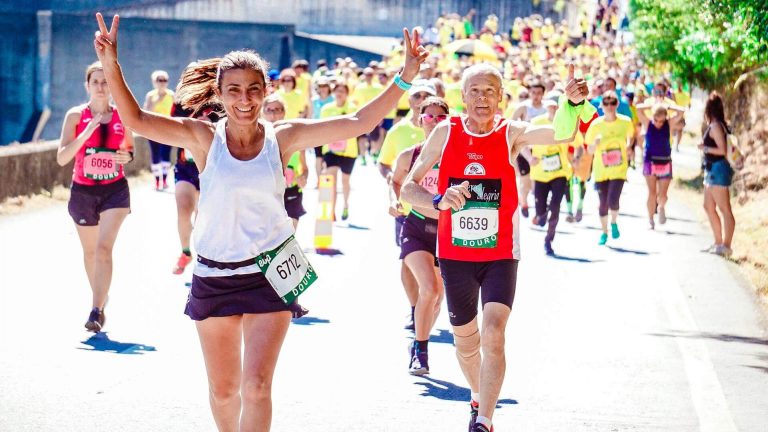
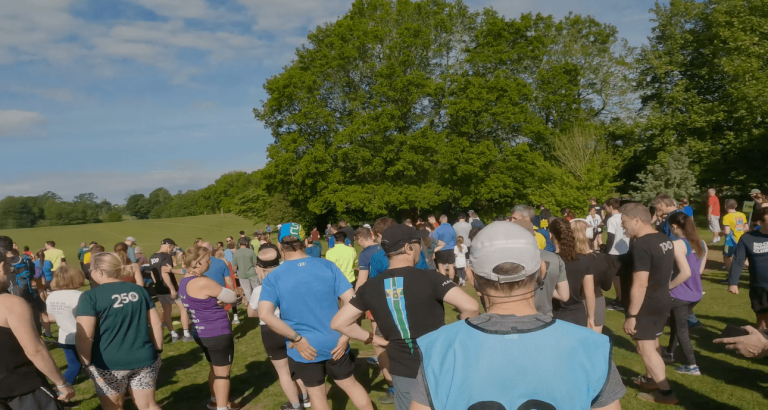
Arrive at your start pen at least 20 minutes before your wave is called. Yes, even if your wave isn’t until 10:30. The walk from bag drop alone will eat 10 minutes. Get your GPS watch syncing while you walk – don’t wait until you’re standing in a crowd to discover it needs a clear sky and three minutes of patience.
Start conservatively. This is the single most repeated piece of advice in distance running, and it remains the single most ignored. The first mile of a half marathon feels effortless – the crowd, the adrenaline, the misplaced confidence. Go slower than feels comfortable. If you think you’re going too slow, go slower still. The miles from nine to thirteen will reward your restraint. Going out too fast and dying on the back half is genuinely one of the worst feelings in amateur sport – slower than planned, suffering more than necessary, watching people who started steadily drift past you with an infuriating air of smug calm.
Fuelling During the Race
For a half marathon, most runners don’t need to take on a gel unless they’re running significantly over two hours. That said, if you’ve trained with gels, take one around mile six or seven – consistency matters more than optimisation at this stage. The NHS sports nutrition guidance suggests adequate carbohydrate intake for endurance events, but the practical reality is: if your stomach doesn’t play nicely with gels in training, don’t throw one down mid-race.
Water stations: take the walk through them. Nobody medals for inhaling water while sprinting. Slow down, drink properly, keep moving. Most UK half marathons have stations roughly every two miles.
Salt tablets are worth considering if it’s a warm day or you’re a heavy sweater – Runner’s World has a solid breakdown of when and why electrolytes actually help during endurance efforts.
Miles Seven to Ten: The Bit Nobody Mentions
If you hit a wall during a half marathon, it usually arrives somewhere around miles seven to ten. You’re not quite at the finish, the novelty has worn off, and your legs have opinions they’re now sharing loudly. This is completely normal. It doesn’t mean something is wrong. It means you’re running a half marathon.
What helps:
- Break it into chunks. “Just get to the next mile marker” is a perfectly valid racing strategy.
- Remind yourself of your easy long runs – you’ve covered this distance before, in training, without the crowd support or the finish line.
- Look for someone wearing a club vest going roughly your pace. Running with someone (even anonymously) is psychologically easier than running alone.
- If you’ve done any strength work – and you really should – this is where it pays off. Weak glutes and hips tend to make themselves known on tired legs. Our guide to strength training for runners covers the exercises most people skip.
The Finish Line and After
The last mile of a half marathon is genuinely brilliant. You’ll find energy you didn’t know existed. Keep your form together – don’t sprint yourself into a faceplant – but enjoy it. You’ve earned the melodrama of a strong finish.
After crossing the line: collect your medal, your foil blanket, your banana. Keep moving for five to ten minutes – walking around rather than sitting straight down. Your cardiovascular system is still working hard and needs time to wind down gradually rather than just switching off. Compression socks immediately post-race are genuinely useful, not just a look.
Expect to feel fine for about 30 minutes, then suddenly very tired. Plan your post-race logistics around this – ideally someone meeting you, or at minimum knowing where the nearest warm dry place is. UK race finishes in October have a way of being both triumphant and extremely cold.
According to UK Athletics, the number of half marathon finishers in the UK has grown significantly in the past decade, making it the most popular long-distance race format in the country. You are in excellent company.
Real Talk
This guide is for anyone lining up for their first half marathon who wants to actually enjoy the experience rather than just survive it. The training gets you to the start line. What happens next involves a bit of chaos, a lot of adrenaline, and at least one porta-loo queue longer than you’d like.
Best for: runners who’ve followed a structured plan and want honest, practical race-day context – not vague motivational platitudes.
Not ideal for: anyone who hasn’t done the training. No amount of race-day strategy makes up for skipping the long runs. That’s the downside of half marathons: they’re long enough that winging it is a genuinely poor idea.
- Eat what you trained on – race morning is not an experiment
- Wear only kit you’ve tested on long runs
- Start slower than feels comfortable, especially the first mile
- Fuel early if you’re running over 90 minutes
- Miles seven to ten are tough for everyone – it passes
- Walk after the finish line, don’t just collapse
Ready to build the base that makes race day actually enjoyable? Start with our 12-week half marathon training plan for UK runners – no fluff, no filler, just the work that matters.