What’s a Good Parkrun Time For Your Age? A Realistic Breakdown
Table of Contents
Right, let’s get this out of the way early. You have almost certainly, at some point in the finish funnel, squinted at your watch and asked yourself what a good parkrun time actually is. Maybe you clocked 24:11 and felt like a Kenyan. Maybe you clocked 24:11 and felt like a bin lorry. Same number, wildly different feelings, and that’s the whole problem with parkrun times as a concept. This piece is the reality check your PB deserves, minus the spreadsheet obsession and plus a bit of self-deprecating honesty about what “good” actually means once you factor in age, terrain, and the fact that your local course has a hill that Strava refuses to acknowledge exists.
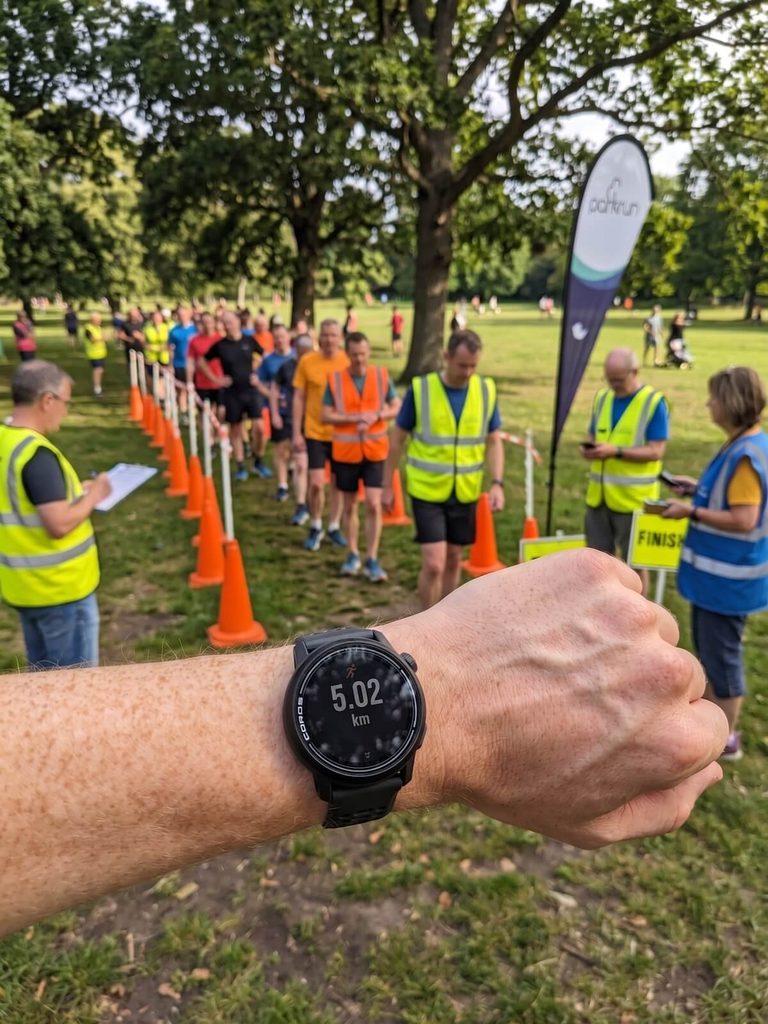
Checking the watch. The universal parkrun ritual, regardless of chip time.
So What Actually Counts as a Good Parkrun Time?
Here’s the slightly annoying truth: there is no single number. A good parkrun time depends entirely on your age, your gender, how long you’ve been running, and whether the course in question is pancake-flat tarmac or a boggy trail loop that eats trainers for breakfast. That said, people want a benchmark, so here’s a rough one. Across the UK, the overall average parkrun finishing time sits somewhere around 28 to 32 minutes. Dip under 25 minutes and you’re comfortably ahead of most of the field. Get under 20 minutes and you’re properly quick, the sort of runner other people quietly resent on a Saturday morning.
Why “Good” Is a Moving Target
A 22-minute parkrun from a 68-year-old is a genuinely outstanding run. The same 22 minutes from a fit 27-year-old club runner is, frankly, a bit of an off day. This is why raw finishing time is a blunt instrument. It tells you nothing about effort, physiology, or the fact that everyone’s VO2 max quietly declines from about age 35 whether we like it or not (the NHS has decent guidance on staying active as you get older, and it’s worth a read before you panic about slowing down).
Course Conditions Matter More Than You Think
Comparing your time on a flat, fast, PB-factory course to your mate’s time on a course with three laps of a muddy park is not a fair fight. Some parkrun courses are famous for being quick; others are famous for making grown adults question their life choices halfway round. Always read a time in context.
- Flat, tarmac, single-lap courses tend to produce faster times across the board
- Multi-lap trail courses with mud, roots or sand can add a minute or more even for experienced runners
- Wind and rain (very on-brand for the UK) can knock 30 to 60 seconds off your usual pace without you doing anything wrong
- Altitude and hills obviously slow everyone down, regardless of what your GAP pace on Strava tries to tell you
Average Parkrun Time By Age: The Real Numbers
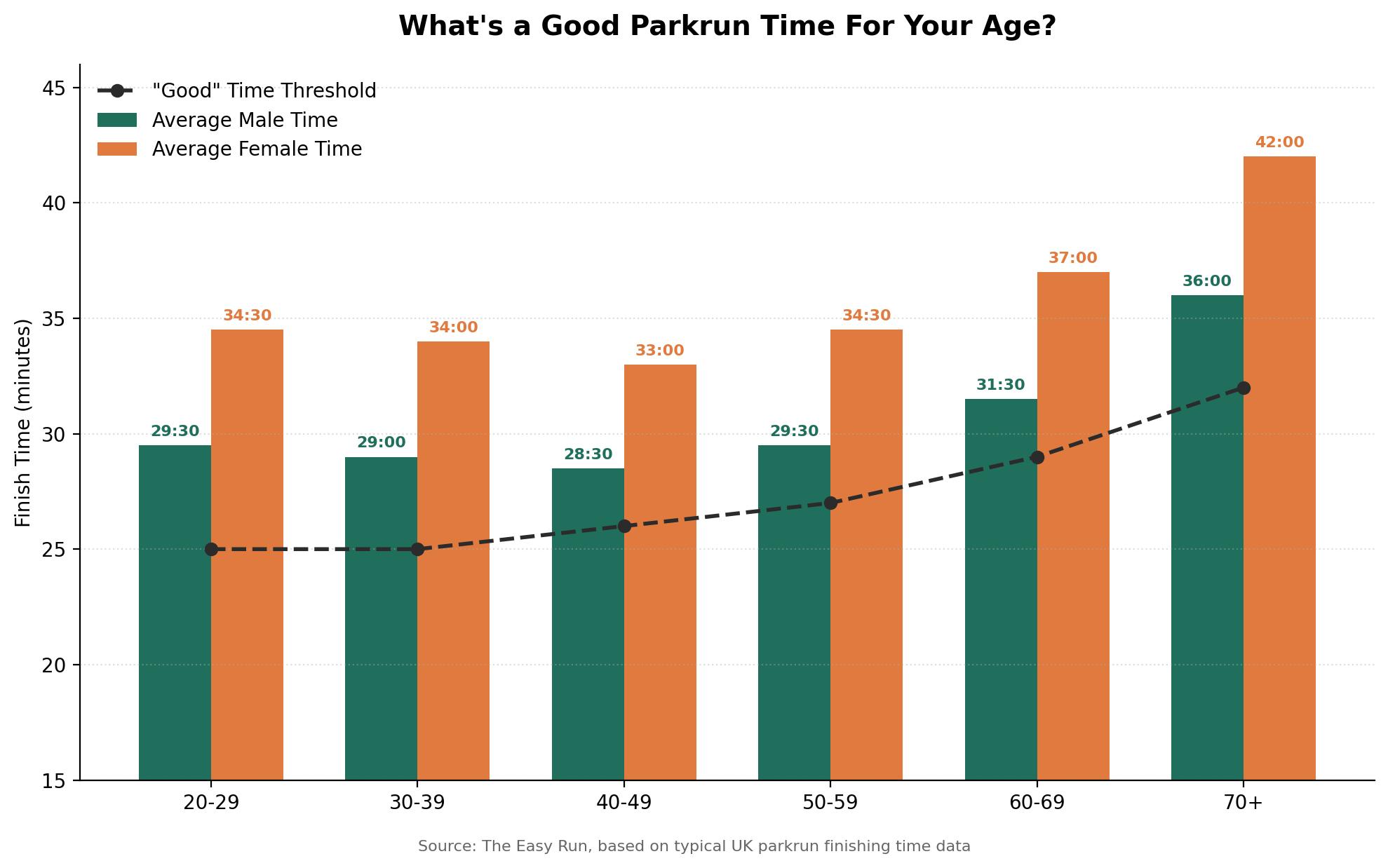
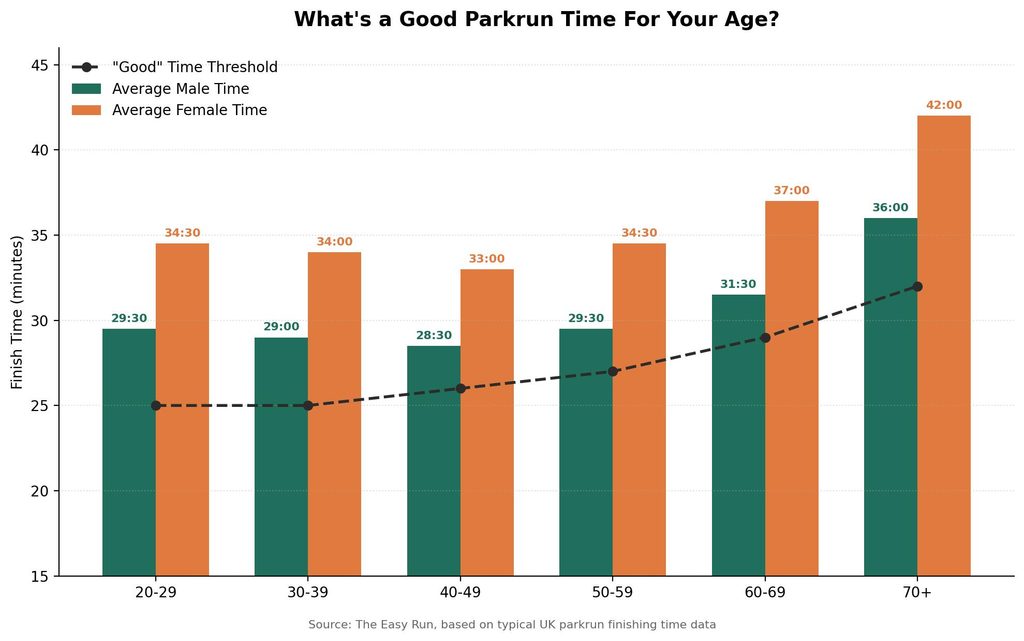
This is the bit everyone actually wants. Below is a realistic snapshot of typical parkrun finishing times by age band, based on broadly published UK parkrun statistics. Treat these as sensible ballpark figures rather than gospel, because parkrun doesn’t publish a single definitive table and every course skews the numbers slightly.
| Age Band | Typical Male Time | Typical Female Time | What Counts as “Good” Here | What Counts as “Quick” |
|---|---|---|---|---|
| 20-29 | 29:30 | 34:30 | Sub 25:00 | Sub 20:00 |
| 30-39 | 29:00 | 34:00 | Sub 25:00 | Sub 20:30 |
| 40-49 | 28:30 | 33:00 | Sub 26:00 | Sub 21:00 |
| 50-59 | 29:30 | 34:30 | Sub 27:00 | Sub 22:30 |
| 60-69 | 31:30 | 37:00 | Sub 29:00 | Sub 24:30 |
| 70+ | 36:00 | 42:00 | Sub 32:00 | Sub 28:00 |
Notice how the “good” and “quick” thresholds barely move much for the 40s and 50s crowd compared to the 20s and 30s crowd. That’s not a fluke. It’s basically why parkrun age grading exists in the first place, because raw times flatten out the genuine achievement of a 58-year-old running a 26-minute 5K.
Parkrun Age Grading Explained: The Fairer Way to Judge a Good Time
If you want the actual honest answer to “is my parkrun time good,” age grading is where you should be looking, not the raw clock. Age grading compares your finish time to the world-record standard for your age and gender, then spits out a percentage. It’s the same principle used in masters athletics, and it’s genuinely the fairest way to compare a 24-minute run from a 25-year-old against a 24-minute run from a 65-year-old.
Roughly, Here’s How the Percentages Break Down
- 90%+ is world class, the kind of age grading that gets you noticed by Athletics Weekly rankings
- 80-89% is considered local or national class, a genuinely excellent runner
- 70-79% is regional class, a properly strong, competitive club runner
- 60-69% is solid club standard, respectable and consistent
- Below 50% is still a finisher, still someone who got out of bed on a Saturday, and that counts for something
We’ve gone into far more depth on the maths and the history of this in our dedicated parkrun age grading explained piece, so if percentages are your thing, that’s your next read.
Age grading turns your finish time into a fairer, comparable percentage.
Is My Parkrun Time Good? Signs You’re Overthinking It
Let’s be honest, most of us aren’t chasing a GFA qualifying standard or a spot on the podium. Most of us are chasing a small dopamine hit and possibly a bacon roll afterwards. So before you spiral about whether your time is “good,” here’s some perspective.
When a “Bad” Time Is Actually a Great Run
Ran a 32-minute parkrun after three hours of sleep, a dodgy knee, and a hangover you’re not proud of? That’s not a bad time. That’s a genuinely impressive act of showing up. Chip time doesn’t measure willpower, and it definitely doesn’t measure how much you regretted the second pint the night before.
When a “Good” Time Doesn’t Mean What You Think
Conversely, a sub-20 on a notoriously short or downhill-heavy course isn’t quite the flex you think it is. Course accuracy varies, and a handful of well-known parkrun routes are famous among club runners for being a touch generous. If you want to compare your race day pace properly, cross-reference against a certified 5K or 10K time, ideally one measured with a proper GPS watch such as a Garmin running watch rather than your phone bouncing around in a running belt.
How to Actually Improve Your Parkrun Time (Without Losing the Plot)
If you’ve decided your current time genuinely isn’t where you want it, the fix is boring but it works: consistency, easy running most of the week, and one structured session. Runner’s World has solid beginner-friendly training plans if you want structure, and Athletics Weekly’s coaching archive is worth a browse for anyone chasing a specific age-grading percentage rather than just a nicer-looking number.
- Run three times a week minimum, with two of those genuinely easy
- Add one session with some pace variation, even just a few short efforts
- Fix your parkrun-day etiquette and positioning, because starting too far back in the pack costs you real seconds weaving through walkers (our parkrun etiquette guide covers exactly where to line up)
- Track long-term trends, not single Saturdays, because one windy, muddy run doesn’t undo six months of consistent training
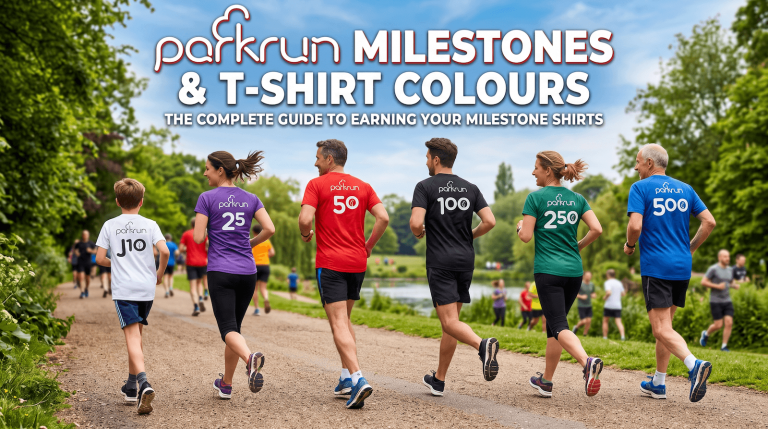
And if you’re chasing a milestone rather than raw speed, know that parkrun rewards the long game too, not just the fast game, as our parkrun milestones and t-shirt colours guide explains in slightly too much detail.
Frequently Asked Questions
What is a good parkrun time for a beginner?
For a genuine first-timer, anything under 30 minutes is a solid result, and finishing at all counts as a win. Most beginners see their time drop naturally over the first three to six months simply through consistent running, without any fancy training plan required.
What is the average parkrun time by age?
Averages sit around 29 to 32 minutes for most adult age bands, with times gradually lengthening from the 60s onward. See the table above for a fuller age-by-age breakdown across both genders.
Is a 25 minute parkrun good?
Yes, for the vast majority of adult runners, a 25 minute parkrun sits comfortably above average and represents solid, consistent training. For runners in their 20s and 30s it’s a respectable club-level pace, and for older age bands it can represent a genuinely excellent age-graded percentage.
How is parkrun age grading calculated?
Your finish time is compared against a world-record standard for your specific age and gender, producing a percentage score. It’s a far more level playing field than comparing raw times across different ages, and we cover the full method in our parkrun age grading explained guide.
Does course difficulty affect what counts as a good parkrun time?
Definitely. Flat, fast, single-lap courses consistently produce quicker times than muddy, multi-lap or hilly routes, so always judge a time in the context of the specific course rather than comparing blindly across venues.
The Verdict
So, what’s a good parkrun time? Genuinely, it’s whatever time reflects honest effort for your age, your fitness, and the state of the course under your feet that particular Saturday. Raw numbers make for a nice headline but age grading tells the real story, and neither should stop you turning up.
- Under 25 minutes is solidly quick for most adults
- Age grading is the fairer comparison tool, not the raw clock
- Course conditions can swing your time by a minute or more
- Consistency beats obsessing over a single bad or good run
This is best for anyone who wants context before comparing themselves to a stranger on Facebook. It’s less useful if you’re after a precise national ranking, since parkrun times are famously inconsistent between courses. Fancy digging into the fairer comparison properly? Read our full parkrun age grading explained guide next.